-
The History of the Virginia Colony, 1607–1775
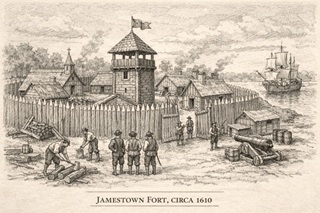
From Fragile Outpost to Revolutionary Keystone The story of the Virginia Colony is, in many ways, the story of early English America itself. Founded in uncertainty, shaped by hardship, and transformed by ambition, Virginia evolved over nearly two centuries from a precarious coastal settlement into the largest, wealthiest, and most politically influential of Britain’s mainland colonies. By 1775, Virginians stood at the forefront of resistance to imperial authority, producing leaders, ideas, and institutions that would guide the American Revolution. Understanding Virginia’s colonial history requires more than recounting famous names or dramatic events. It means tracing how geography, labor systems, political culture, and economic priorities interacted over time—often with consequences that…
-
An Introduction to the Thirteen American Colonies
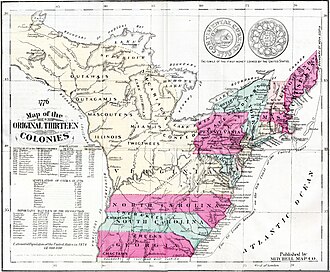
Before the United States existed as a nation, it existed as a collection of distinct colonies—each with its own founding purpose, social character, economy, and relationship to Britain. The Thirteen American Colonies, established along the Atlantic seaboard between the early seventeenth and early eighteenth centuries, were never a single, unified project. They differed sharply in religion, labor systems, settlement patterns, and political culture. Yet it was precisely this diversity that shaped the American experience. When tensions with Britain escalated in the eighteenth century, these colonies—often divided among themselves—were forced to discover common ground. Understanding the origins and character of each colony provides essential context for understanding the American Revolution, the…
-
Paul Revere and the World He Lived In: History Beyond the Midnight Ride
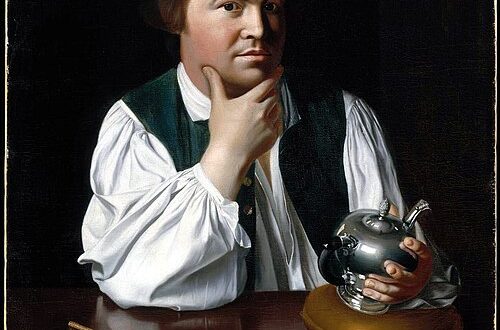
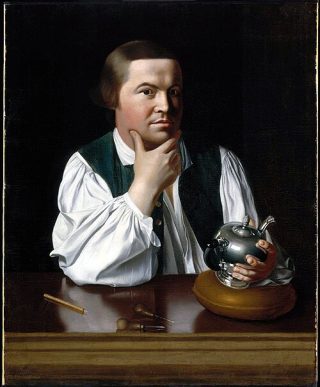
A review of a classic history text and its author, Esther Forbes Few figures in American history are as instantly recognizable—and as poorly understood—as Paul Revere. Reduced in popular memory to a single dramatic night, he often appears less as a historical person than as a patriotic symbol. Esther Forbes’s Paul Revere and the World He Lived In, first published in 1942 and awarded the Pulitzer Prize for History, decisively dismantles that simplification. What Forbes offers is not merely a biography, but a richly textured portrait of eighteenth-century New England, seen through the life of one man who was deeply embedded in its political, economic, and social currents. This book…
-
Seven Classics in History We Should Read Before We Die
History is not merely a record of dates, battles, and political transitions. At its best, it is a conversation across generations—a way of entering the minds of people who lived in radically different circumstances yet wrestled with questions that remain deeply familiar. Why do societies rise and fall? What gives life meaning in the face of suffering? How do belief systems, myths, and moral ideals shape human behavior? The books we choose to read about history matter because they shape how we interpret the present. Some works illuminate a specific era with extraordinary clarity; others help us understand the enduring structures of human thought, belief, and resilience. The following seven…
-
Learning to Release What No Longer Serves You: A Review of The Art of Letting Go
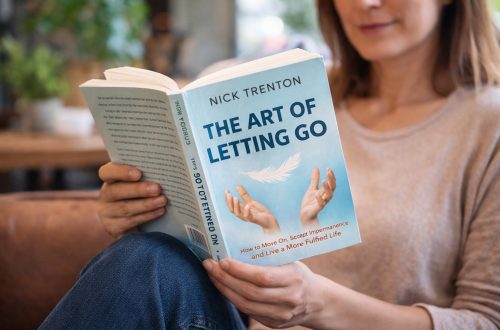
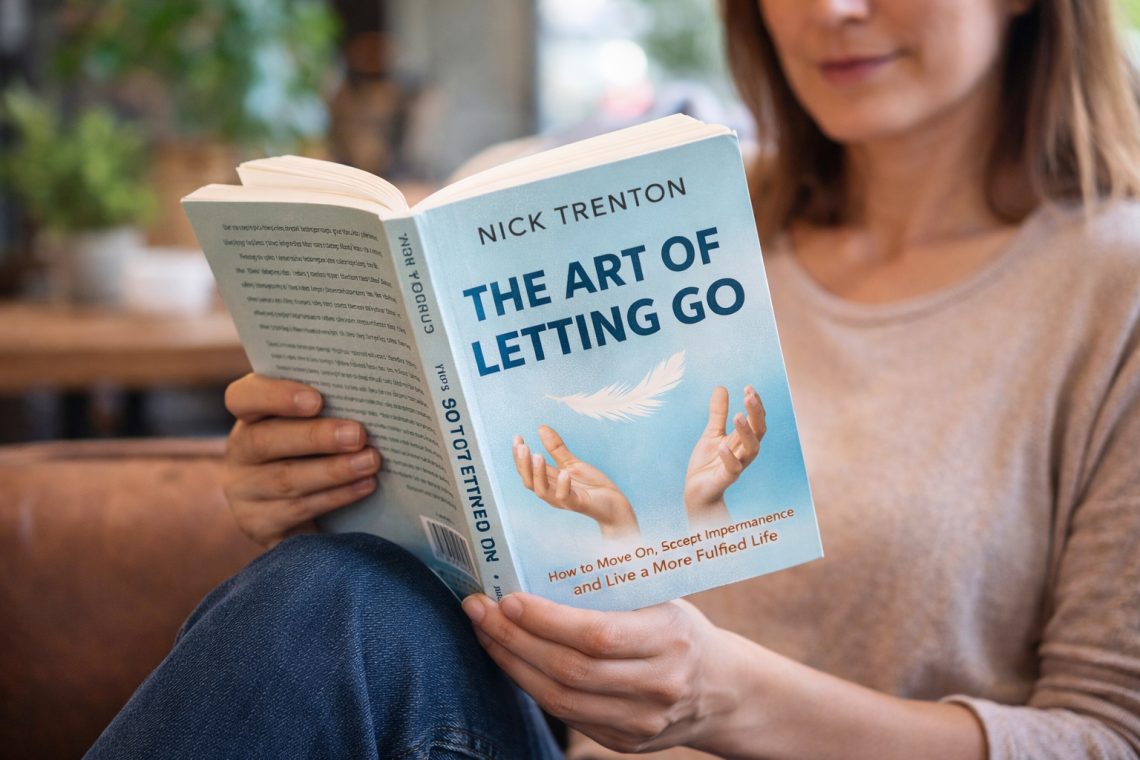
In a culture that quietly rewards control, productivity, and constant self-optimization, the idea of “letting go” can sound suspiciously passive—almost irresponsible. Yet the inability to let go is one of the most common sources of emotional suffering: rumination over past mistakes, clinging to relationships that have run their course, or endlessly replaying fears about a future that hasn’t happened. In The Art of Letting Go, Nick Trenton argues that letting go is not weakness, avoidance, or resignation. It is a skill—one that can be learned, practiced, and refined. Written in Trenton’s trademark clear and conversational style, the book serves as both a psychological primer and a practical guide. Rather than…
-
Developing Positive Habits: How Small Choices Shape a Better Life
Most people think of personal transformation as something dramatic—a sudden burst of motivation, a decisive turning point, or a radical life overhaul. In reality, lasting change almost never works that way. The lives we end up living are shaped less by single moments and more by the quiet, repeated actions we perform every day. These actions, when practiced consistently, become habits. And habits, whether helpful or harmful, slowly but powerfully shape who we become. Developing positive habits is not about perfection or rigid self-discipline. It is about designing a way of living that makes growth more natural, more sustainable, and more humane. When approached thoughtfully, habits become allies rather than…
-
Understanding Hegel’s Dialectic
Few ideas in the history of philosophy have been as influential—and as misunderstood—as the dialectic of Georg Wilhelm Friedrich Hegel. The word dialectic is often invoked casually, reduced to a simple formula of “thesis, antithesis, synthesis,” or treated as an abstract puzzle best left to specialists. Yet for Hegel, dialectic was neither a slogan nor a rigid method. It was a way of understanding how reality itself develops—how ideas, institutions, cultures, and even freedom unfold over time through tension, contradiction, and resolution. To understand Hegel’s dialectic is to gain insight into modern philosophy, political theory, history, and even contemporary debates about progress and conflict. This essay aims to clarify what…
You May Also Like
The Historical Impact of Lord Byron’s Poetry
-
Six Ways Brunelleschi’s Perspective Still Shapes Modern Life, Art, and Architecture
When Filippo Brunelleschi demonstrated linear perspective in early fifteenth-century Florence, he wasn’t just solving an artistic problem. He was offering a new way to organize reality itself—one that aligned space with human perception and mathematical order. What began as an experiment with mirrors and geometry became a quiet revolution whose effects still ripple through modern art, architecture, technology, and everyday visual culture. Here are six enduring impacts of Brunelleschi’s concept of perspective—and why it still matters. 1. A New Way of Seeing the World Brunelleschi’s most profound legacy is perceptual. Linear perspective taught Western culture to imagine space as something coherent, measurable, and unified around a single viewpoint. This was…
-
Another Look at Roanoke
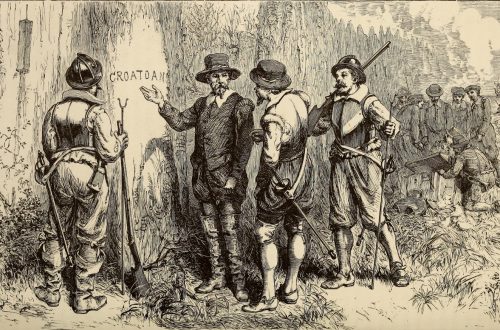
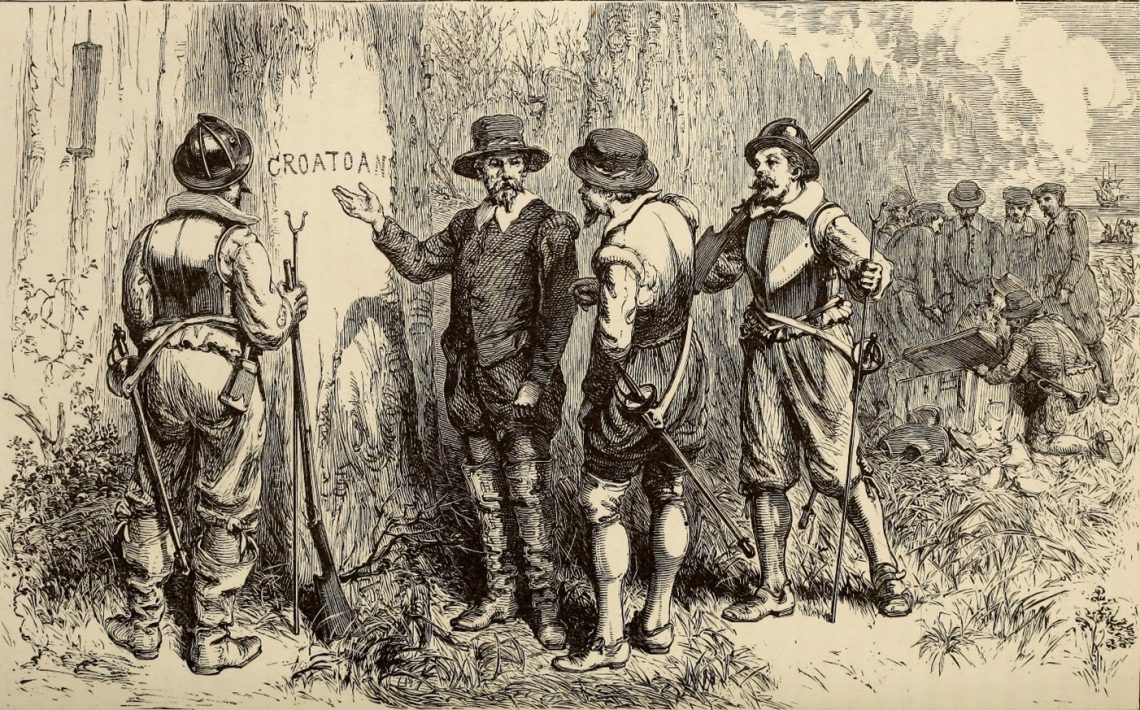
🧭 After 438 Years, New Clues to the Fate of the Lost Colony For centuries, the tragic disappearance of the Roanoke colonists has fascinated historians, archaeologists, and amateur sleuths alike. When Governor John White returned to Roanoke Island in 1590, he found the settlement abandoned with only one cryptic clue — the word “CROATOAN” carved into a palisade. Now, in 2025, fresh evidence is reigniting the centuries-old conversation about what really happened to those 117 English men, women, and children. (Wikipedia) 🔍 The Missing Colonists: A New Focus on Hatteras Island Recent excavations on Hatteras Island — historically known as Croatoan Island — have uncovered surprising archaeological finds that could…
-
The Historical Impact of Lord Byron’s Poetry
Few poets have lived so intensely in the public imagination—or left so visible a mark on culture, politics, and literary identity—as Lord Byron. Writing at the height of the Romantic movement, Byron transformed poetry into a force that spilled far beyond the page. His verse reshaped ideas of individual freedom, political resistance, emotional authenticity, and even celebrity itself. To read Byron is not only to encounter a powerful poetic voice, but to witness the emergence of modern attitudes toward art, rebellion, and selfhood. This essay explores the historical impact of Byron’s poetry across literature, politics, culture, and national identity, tracing how his work helped redefine what poetry could do—and what…