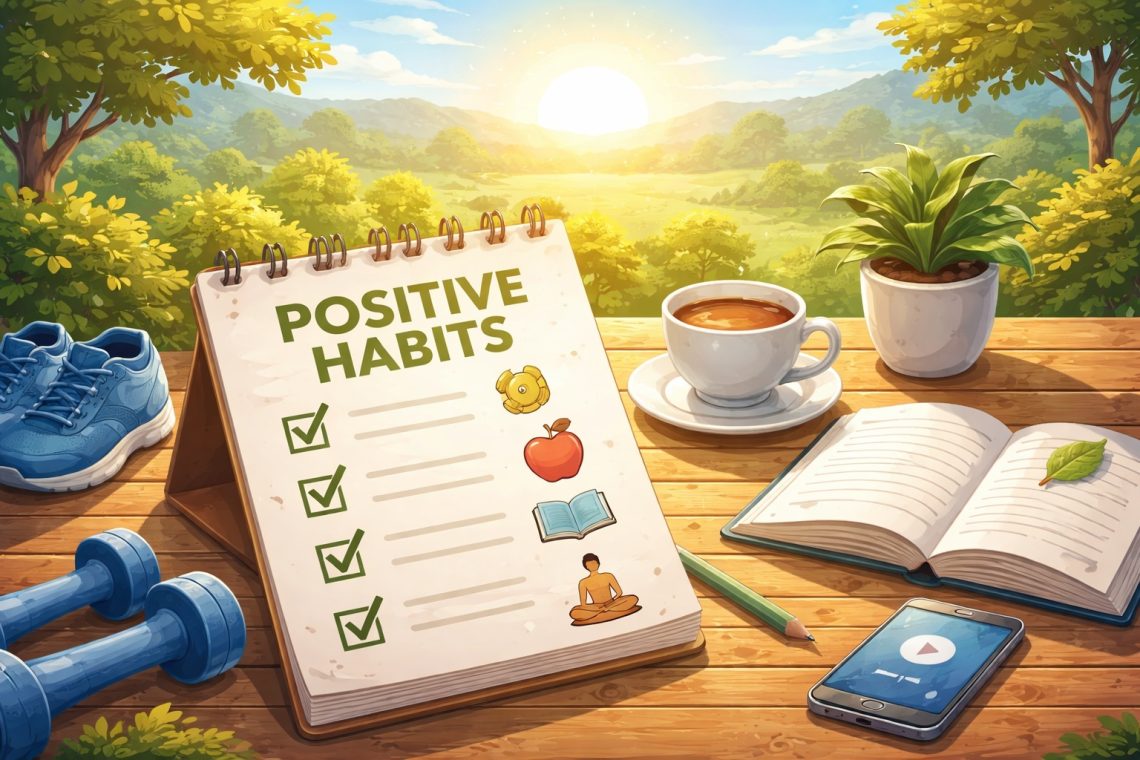
Developing Positive Habits: How Small Choices Shape a Better Life
Most people think of personal transformation as something dramatic—a sudden burst of motivation, a decisive turning point, or a radical life overhaul. In reality, lasting change almost never works that way. The lives we end up living are shaped less by single moments and more by the quiet, repeated actions we perform every day. These actions, when practiced consistently, become habits. And habits, whether helpful or harmful, slowly but powerfully shape who we become.
Developing positive habits is not about perfection or rigid self-discipline. It is about designing a way of living that makes growth more natural, more sustainable, and more humane. When approached thoughtfully, habits become allies rather than burdens—structures that support us when motivation inevitably fades.
Why Habits Matter More Than Motivation
Motivation is an unreliable force. It rises and falls depending on mood, energy, stress, and circumstances. Habits, on the other hand, operate almost automatically. Once established, they require far less mental effort to maintain. This is why habits are so powerful: they remove decision-making from the equation.
If you rely on motivation alone to exercise, read, write, or eat well, you are constantly negotiating with yourself. Should I do this today? Do I feel like it? Habits eliminate that negotiation. The behavior simply becomes “what you do,” not something you debate.
Over time, habits compound. A single healthy meal does not transform your body, but a pattern of healthy eating does. Writing one page does not make you an author, but writing a page every day does. Small actions, repeated consistently, quietly produce extraordinary results.
Start Small—Smaller Than You Think
One of the most common mistakes people make when trying to build positive habits is starting too big. They aim for radical change: an hour at the gym every day, a complete diet overhaul, or waking up two hours earlier every morning. While these goals may be admirable, they often fail because they demand too much too soon.
The key to habit formation is to lower the barrier to entry. A habit should be so small that it feels almost trivial. Instead of committing to reading for an hour each night, commit to reading one page. Instead of a full workout, start with five minutes of movement. Instead of journaling three pages, write one sentence.
Small habits succeed because they are easy to repeat. They build confidence and consistency. Once the habit is established, it can naturally expand. But consistency always comes before intensity.
Focus on Identity, Not Outcomes
Positive habits stick best when they are tied to identity rather than external goals. Goals are about results: losing weight, earning more money, finishing a book. Identity-based habits are about who you are becoming: a healthy person, a disciplined worker, a thoughtful reader.
When your habit aligns with your identity, it becomes meaningful. You are no longer forcing yourself to act against your nature; you are reinforcing it. Each small action becomes a vote for the kind of person you want to be.
Instead of saying, “I’m trying to write a book,” say, “I’m a writer, and writers write regularly.” Instead of “I want to exercise more,” say, “I’m someone who takes care of my body.” This subtle shift reframes habits from chores into expressions of self-respect.
Design Your Environment for Success
Willpower is finite, but environment is powerful. One of the smartest ways to develop positive habits is to make good behaviors easier and bad behaviors harder.
If you want to read more, keep a book on your desk or nightstand. If you want to eat healthier, keep nutritious food visible and accessible. If you want to reduce screen time, remove distracting apps from your phone or place your device in another room during focused work.
Habits thrive when friction is minimized. The fewer obstacles between you and the behavior, the more likely you are to repeat it. Rather than relying on constant self-control, let your environment do some of the work for you.
Attach New Habits to Existing Routines
One effective strategy for building habits is habit stacking—linking a new habit to something you already do consistently. Existing routines act as anchors, making it easier to remember and repeat the new behavior.
For example:
- After brushing your teeth, meditate for one minute.
- After making your morning coffee, read a page of a book.
- After sitting down at your desk, write one sentence.
By attaching new habits to established ones, you reduce the mental effort required to begin. The habit becomes part of a sequence rather than a standalone task.
Expect Imperfection—and Plan for It
Many people abandon habits because they miss a day and assume they have failed. This all-or-nothing thinking is one of the biggest obstacles to long-term change. Progress is not linear, and consistency does not mean perfection.
Missing a day is not the problem; quitting is. A useful rule is to never miss twice. If you skip a habit one day, simply return to it the next. Habits are built over weeks and months, not judged by isolated lapses.
Self-compassion is essential. Habits should support your life, not punish you for being human.
Track Progress, but Keep It Simple
Tracking habits can increase awareness and accountability, but it should never become burdensome. A simple checklist, calendar mark, or short note is often enough. The goal is not obsessive measurement but gentle reinforcement.
Seeing evidence of consistency—even in small amounts—can be surprisingly motivating. It reminds you that progress is happening, even when results are not immediately visible.
Habits as a Philosophy of Living
At their best, positive habits are not just productivity tools; they are a philosophy of living. They teach patience, humility, and trust in gradual progress. They remind us that meaningful change rarely arrives overnight, but it almost always arrives eventually when we show up consistently.
Developing positive habits is an act of self-respect. It is the decision to care for your future self through small, intentional actions today. You do not need to change everything at once. You only need to choose one small behavior worth repeating—and then repeat it.
In time, those small choices become a life.
