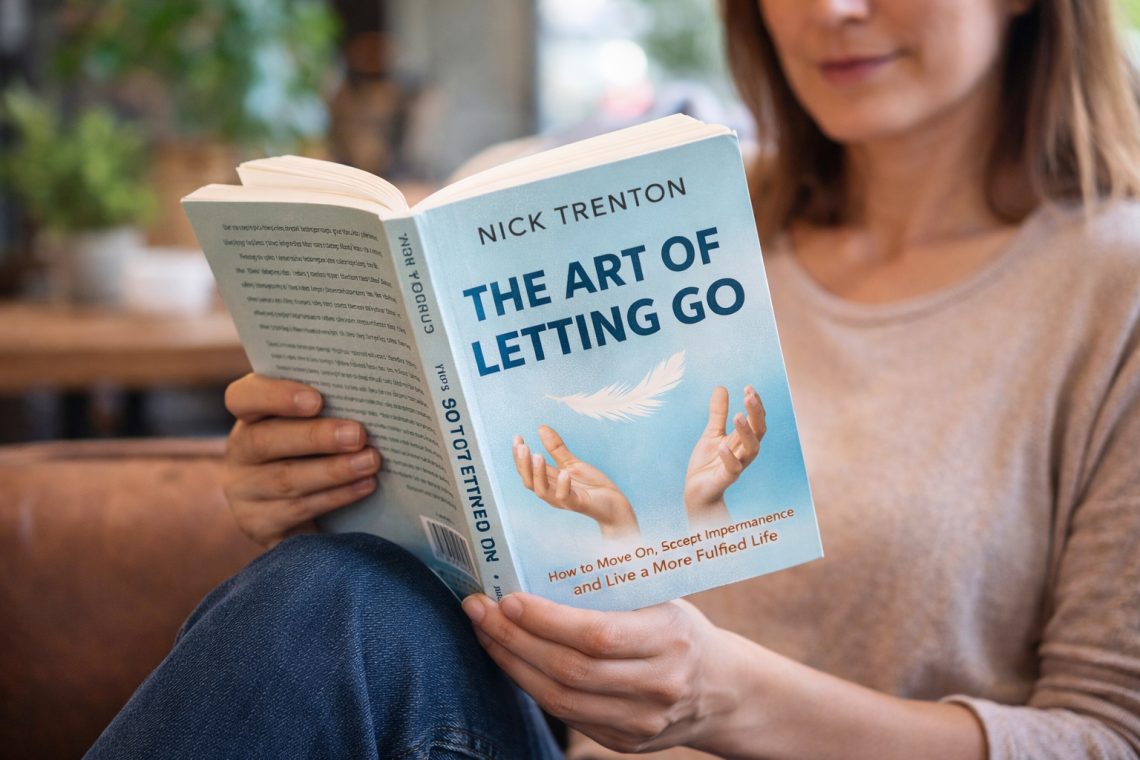
Learning to Release What No Longer Serves You: A Review of The Art of Letting Go
In a culture that quietly rewards control, productivity, and constant self-optimization, the idea of “letting go” can sound suspiciously passive—almost irresponsible. Yet the inability to let go is one of the most common sources of emotional suffering: rumination over past mistakes, clinging to relationships that have run their course, or endlessly replaying fears about a future that hasn’t happened. In The Art of Letting Go, Nick Trenton argues that letting go is not weakness, avoidance, or resignation. It is a skill—one that can be learned, practiced, and refined.
Written in Trenton’s trademark clear and conversational style, the book serves as both a psychological primer and a practical guide. Rather than relying on abstract philosophy alone, Trenton grounds his ideas in cognitive science, emotional awareness, and everyday habits. The result is a book that feels accessible without being simplistic and reassuring without becoming vague.
The Central Thesis: Control Is Often the Problem
At the heart of The Art of Letting Go lies a counterintuitive insight: much of our distress comes not from what happens to us, but from our insistence on controlling outcomes that are fundamentally uncontrollable. Trenton repeatedly emphasizes that human beings are meaning-making machines. When something goes wrong, the mind searches for explanations, assigns blame, and replays events in a futile attempt to “fix” the past.
Letting go, as Trenton defines it, does not mean forgetting, suppressing, or pretending something never mattered. It means releasing the compulsive need to relive or resolve what cannot be changed. This distinction is crucial. Many people resist letting go because they confuse it with indifference. Trenton makes the case that letting go is actually an act of clarity—acknowledging what is within your influence and what is not.
This framing immediately separates the book from more superficial positivity manuals. Trenton does not ask readers to “think happy thoughts” or deny pain. Instead, he invites them to confront reality more honestly by relinquishing mental habits that perpetuate suffering.
Key Point One: Emotional Detachment Is Not Emotional Suppression
One of the book’s most valuable contributions is its careful distinction between emotional detachment and emotional suppression. Suppression, Trenton explains, is the act of pushing feelings away, numbing them, or pretending they do not exist. Detachment, by contrast, involves observing emotions without being consumed by them.
Trenton draws on principles from mindfulness and cognitive behavioral psychology to show how emotions lose their grip when they are acknowledged rather than resisted. When we fight emotions, we paradoxically strengthen them. When we allow them to exist—without building elaborate stories around them—they tend to pass more quickly.
This section of the book is especially helpful for readers who pride themselves on being “rational” but secretly struggle with emotional overload. Trenton reframes emotional awareness as a form of mental discipline rather than vulnerability. You are not becoming less strong by noticing your emotions; you are becoming less controlled by them.
Key Point Two: Rumination Is a Habit, Not a Truth-Seeking Process
Another major theme in The Art of Letting Go is the nature of rumination. Trenton dismantles the common belief that replaying past events is a productive form of problem-solving. In reality, rumination is a habit—one that tricks the mind into feeling busy while going nowhere.
The book explains how the brain confuses familiarity with usefulness. A thought that appears repeatedly begins to feel important simply because it is familiar. Trenton encourages readers to recognize this pattern and interrupt it. Thoughts are not commands, prophecies, or objective facts; they are mental events that can be observed and redirected.
Rather than trying to “win” arguments with your own mind, Trenton suggests shifting attention to present-focused anchors: physical sensations, simple routines, or purposeful action. Letting go of rumination is not about forcing silence, but about starving unhelpful thought loops of the attention they feed on.
This insight alone makes the book worth reading for anyone who struggles with anxiety, regret, or overthinking.
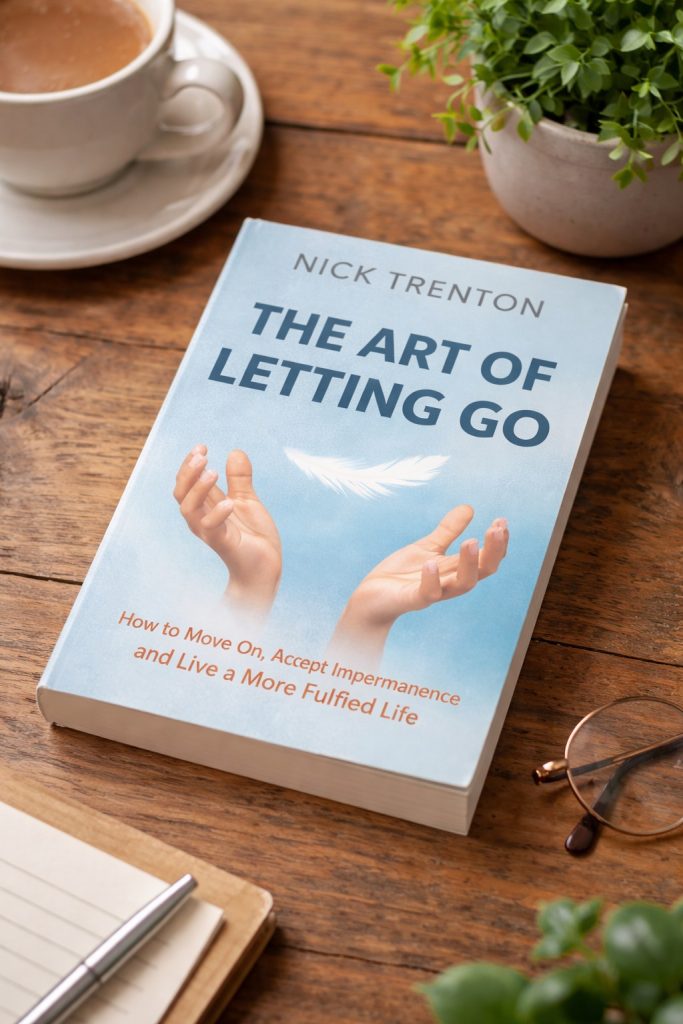
Key Point Three: Letting Go Is an Ongoing Practice, Not a One-Time Decision
Perhaps the most realistic and compassionate aspect of Trenton’s approach is his refusal to present letting go as a single, dramatic breakthrough. Letting go is not something you do once and complete forever. It is something you practice repeatedly—sometimes daily.
The book emphasizes that old attachments resurface, especially during stress, loss, or uncertainty. This does not mean you have failed. It means you are human. Trenton encourages readers to adopt a long-term perspective: each time you notice yourself clinging, you have another opportunity to release.
By framing letting go as a skill rather than a personality trait, the book removes a great deal of self-judgment. You do not need to become a different person to let go. You need to develop different responses.
Style, Tone, and Audience
Nick Trenton’s writing style is direct, calm, and reassuring. He avoids excessive jargon while still respecting the reader’s intelligence. The chapters are short and focused, making the book easy to revisit rather than read only once.
The Art of Letting Go will appeal especially to readers interested in psychology, mindfulness, emotional resilience, and personal development. It is particularly well-suited for those who feel mentally exhausted by overthinking or emotionally stuck in past experiences.
Final Thoughts
The Art of Letting Go succeeds because it treats letting go not as a mystical concept, but as a practical mental discipline. Trenton does not promise instant peace or emotional immunity. What he offers instead is something more credible and more valuable: a way to reduce unnecessary suffering by changing how you relate to your own thoughts and emotions.
For readers seeking clarity, emotional freedom, and a more grounded relationship with their inner life, this book is a thoughtful and useful companion—one worth returning to whenever the mind begins to hold on too tightly.
When you use links on this page to make a purchase, CCM receives a modest commission. We thank you for supporting us.
