Another Look at Roanoke
🧭 After 438 Years, New Clues to the Fate of the Lost Colony
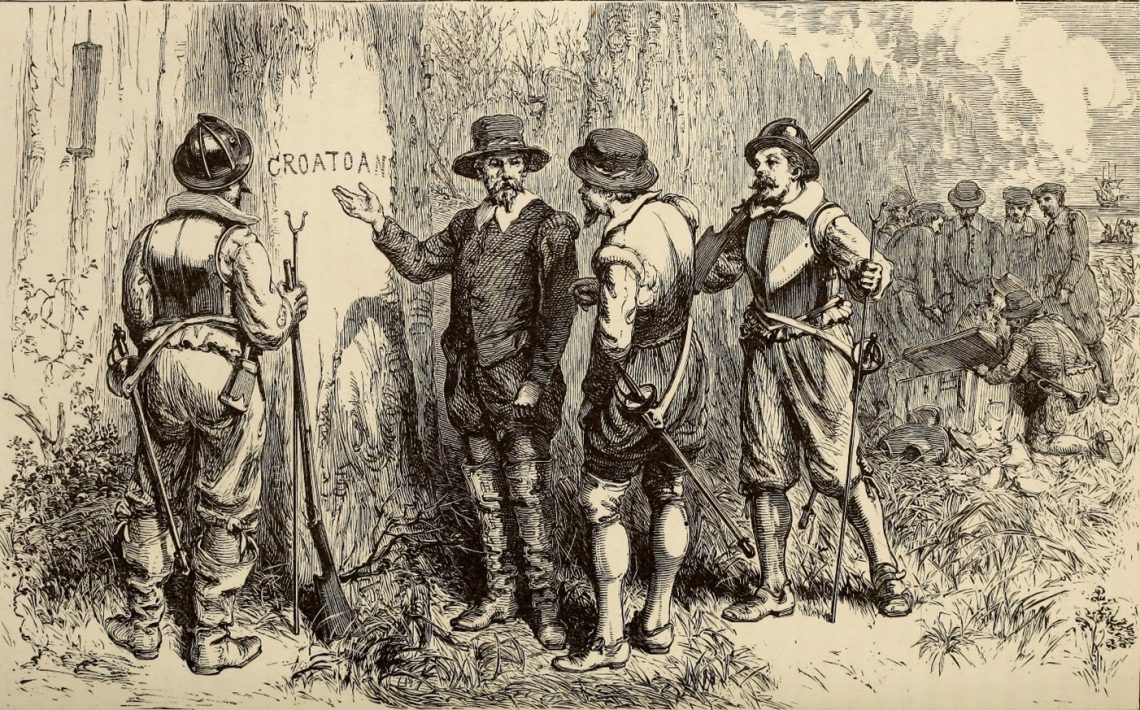
For centuries, the tragic disappearance of the Roanoke colonists has fascinated historians, archaeologists, and amateur sleuths alike. When Governor John White returned to Roanoke Island in 1590, he found the settlement abandoned with only one cryptic clue — the word “CROATOAN” carved into a palisade. Now, in 2025, fresh evidence is reigniting the centuries-old conversation about what really happened to those 117 English men, women, and children. (Wikipedia)
🔍 The Missing Colonists: A New Focus on Hatteras Island
Recent excavations on Hatteras Island — historically known as Croatoan Island — have uncovered surprising archaeological finds that could finally explain the fate of the lost English settlers.
🛠️ Hammer Scale: A Smoking Gun?
One of the most striking discoveries came when workers uncovered hammer scale — tiny flakes created as a byproduct of iron forging. Archaeologists found these particles buried beneath layers of refuse dating to the late 16th century on Hatteras Island. Because Indigenous peoples in that region did not traditionally practice iron smithing at that time, many researchers argue that this metal residue is evidence the colonists themselves were working iron tools or equipment there, suggesting they relocated from Roanoke Island and began living among the Croatoan people. (Wikipedia)
Recently, the media widely covered these findings, relying predominantly on archaeologist Dr. Mark Horton and local researcher Scott Dawson, who have directed much of the fieldwork and interpretation. Some call this the long-sought “smoking gun” in the mystery of the Lost Colony. (All That’s Interesting)
🧠 Assimilation Rather Than Extinction
The iron-forging evidence clearly suggests that instead of dying out or being wiped out, the Roanoke colonists may have joined and assimilated into local Indigenous societies.
Supporters of this view note:
- Researchers found other English artifacts, such as small cannonballs, nautical fittings, glass beads, and wine glass fragments in refuse layers on Hatteras Island, suggesting a mix of English and Indigenous material culture. (Fox News)
- Historical records describe friendly relations between some colonists and Native groups like the Croatoan. (Wikipedia)
If true, the colonists didn’t vanish — they became part of the rich tapestry of early North American cultural interaction.
💬 Debate and Skepticism Remain
Not everyone in the academic community is convinced by the recent findings.
Critics argue:
- Iron tools and European artifacts might have reached Indigenous groups through trade instead of sustained settlement. (Wikipedia)
- No confirmed graves, structures, or clear European-style dwellings have yet been found on Hatteras from that period. (National Park Service)
Because of this, while the evidence is intriguing and perhaps the strongest yet, it doesn’t yet definitively solve the mystery.
🧩 What This Means for the Lost Colony Story
The newest evidence marks a major shift in our understanding of the Lost Colony:
- It moves the discussion beyond speculation and legend into tangible archaeological data.
- It bolsters the idea that the colonists’ story didn’t end in tragedy, but possibly in cultural blending and survival.
- It also highlights how much we have yet to learn about early encounters between Europeans and Native Americans in what would become the United States.
🕰️ Still a Mystery — But Closer Than Ever
Nearly four and a half centuries after John White’s final visit to Roanoke Island, researchers continue to chip away at an enigma that has captured imaginations for generations. With each artifact uncovered and each layer of sediment analyzed, we come closer not just to answering what happened — but to understanding the resilience and adaptability of those early settlers and their Indigenous neighbors.
Whether the Lost Colony was truly lost or simply transformed into something new, one thing is clear: the story of Roanoke still has powerful lessons for how we view early American history.