-
Paul Revere and the World He Lived In: History Beyond the Midnight Ride
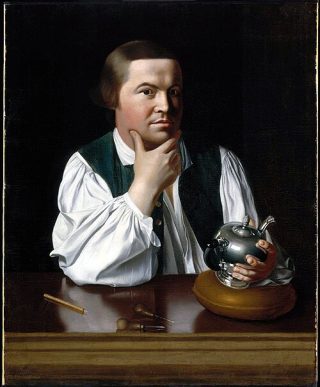
A review of a classic history text and its author, Esther Forbes Few figures in American history are as instantly recognizable—and as poorly understood—as Paul Revere. Reduced in popular memory to a single dramatic night, he often appears less as a historical person than as a patriotic symbol. Esther Forbes’s Paul Revere and the World He Lived In, first published in 1942 and awarded the Pulitzer Prize for History, decisively dismantles that simplification. What Forbes offers is not merely a biography, but a richly textured portrait of eighteenth-century New England, seen through the life of one man who was deeply embedded in its political, economic, and social currents. This book…
-
Seven Classics in History We Should Read Before We Die
History is not merely a record of dates, battles, and political transitions. At its best, it is a conversation across generations—a way of entering the minds of people who lived in radically different circumstances yet wrestled with questions that remain deeply familiar. Why do societies rise and fall? What gives life meaning in the face of suffering? How do belief systems, myths, and moral ideals shape human behavior? The books we choose to read about history matter because they shape how we interpret the present. Some works illuminate a specific era with extraordinary clarity; others help us understand the enduring structures of human thought, belief, and resilience. The following seven…
-
Six Ways Brunelleschi’s Perspective Still Shapes Modern Life, Art, and Architecture
When Filippo Brunelleschi demonstrated linear perspective in early fifteenth-century Florence, he wasn’t just solving an artistic problem. He was offering a new way to organize reality itself—one that aligned space with human perception and mathematical order. What began as an experiment with mirrors and geometry became a quiet revolution whose effects still ripple through modern art, architecture, technology, and everyday visual culture. Here are six enduring impacts of Brunelleschi’s concept of perspective—and why it still matters. 1. A New Way of Seeing the World Brunelleschi’s most profound legacy is perceptual. Linear perspective taught Western culture to imagine space as something coherent, measurable, and unified around a single viewpoint. This was…
-
The Historical Impact of Lord Byron’s Poetry
Few poets have lived so intensely in the public imagination—or left so visible a mark on culture, politics, and literary identity—as Lord Byron. Writing at the height of the Romantic movement, Byron transformed poetry into a force that spilled far beyond the page. His verse reshaped ideas of individual freedom, political resistance, emotional authenticity, and even celebrity itself. To read Byron is not only to encounter a powerful poetic voice, but to witness the emergence of modern attitudes toward art, rebellion, and selfhood. This essay explores the historical impact of Byron’s poetry across literature, politics, culture, and national identity, tracing how his work helped redefine what poetry could do—and what…