American history
-
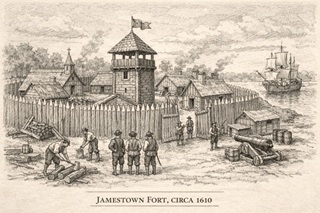
The History of the Virginia Colony, 1607–1775
From Fragile Outpost to Revolutionary Keystone The story of the Virginia Colony is, in many ways, the story of early English America itself. Founded in uncertainty, shaped by hardship, and transformed by ambition, Virginia evolved over nearly two centuries from a precarious coastal settlement into the largest, wealthiest, and most politically influential of Britain’s mainland colonies. By 1775, Virginians stood at the forefront of resistance to imperial authority, producing leaders, ideas, and institutions that would guide the American Revolution. Understanding Virginia’s colonial history requires more than recounting famous names or dramatic events. It means tracing how geography, labor systems, political culture, and economic priorities interacted over time—often with consequences that…
-
An Introduction to the Thirteen American Colonies
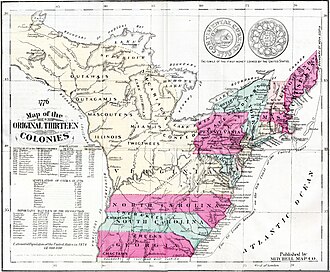
Before the United States existed as a nation, it existed as a collection of distinct colonies—each with its own founding purpose, social character, economy, and relationship to Britain. The Thirteen American Colonies, established along the Atlantic seaboard between the early seventeenth and early eighteenth centuries, were never a single, unified project. They differed sharply in religion, labor systems, settlement patterns, and political culture. Yet it was precisely this diversity that shaped the American experience. When tensions with Britain escalated in the eighteenth century, these colonies—often divided among themselves—were forced to discover common ground. Understanding the origins and character of each colony provides essential context for understanding the American Revolution, the…
-
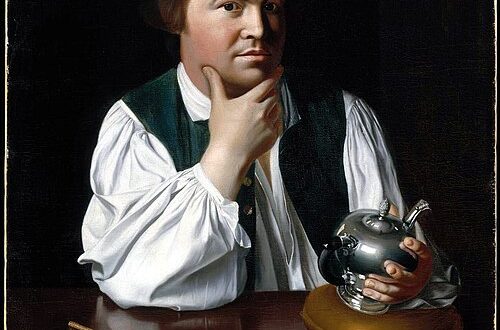
Paul Revere and the World He Lived In: History Beyond the Midnight Ride
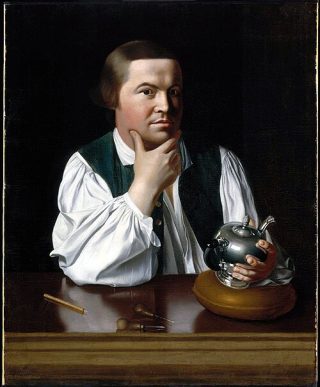
A review of a classic history text and its author, Esther Forbes Few figures in American history are as instantly recognizable—and as poorly understood—as Paul Revere. Reduced in popular memory to a single dramatic night, he often appears less as a historical person than as a patriotic symbol. Esther Forbes’s Paul Revere and the World He Lived In, first published in 1942 and awarded the Pulitzer Prize for History, decisively dismantles that simplification. What Forbes offers is not merely a biography, but a richly textured portrait of eighteenth-century New England, seen through the life of one man who was deeply embedded in its political, economic, and social currents. This book…
-
Another Look at Roanoke
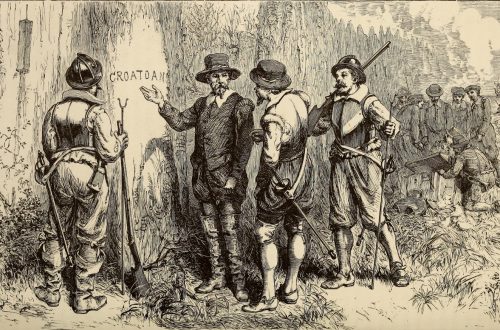
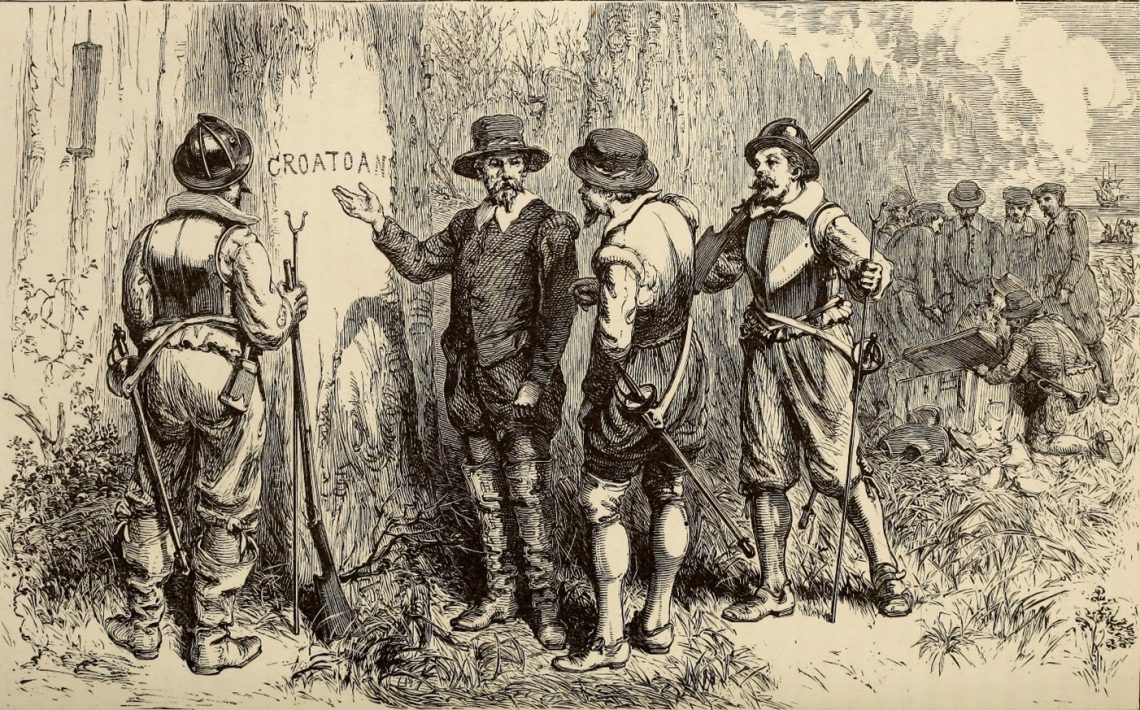
🧭 After 438 Years, New Clues to the Fate of the Lost Colony For centuries, the tragic disappearance of the Roanoke colonists has fascinated historians, archaeologists, and amateur sleuths alike. When Governor John White returned to Roanoke Island in 1590, he found the settlement abandoned with only one cryptic clue — the word “CROATOAN” carved into a palisade. Now, in 2025, fresh evidence is reigniting the centuries-old conversation about what really happened to those 117 English men, women, and children. (Wikipedia) 🔍 The Missing Colonists: A New Focus on Hatteras Island Recent excavations on Hatteras Island — historically known as Croatoan Island — have uncovered surprising archaeological finds that could…