Maryland: A Colonial Experiment, 1634–1775
Maryland’s colonial history is a story of aspiration, improvisation, conflict, and compromise. Founded in 1634 as a proprietary colony under the authority of the Calvert family, Maryland was envisioned as both a profitable venture and a social experiment—most famously, a place where Christians of different denominations might coexist. Over the course of nearly a century and a half, that vision would be tested by religious strife, political upheaval, economic transformation, and the growing pressures of empire. By the eve of the American Revolution in 1775, Maryland had evolved from a fragile outpost on the Chesapeake into a mature, complex society deeply enmeshed in the Atlantic world and increasingly skeptical of British rule.
What follows is a chronological exploration of Maryland’s colonial development, tracing its origins, its distinctive political and religious institutions, its tobacco-based economy, and its role in the growing resistance to imperial authority.
The Founding Vision: Lord Baltimore and the Maryland Charter

The colony of Maryland owed its existence to Cecil Calvert, the second Lord Baltimore. His father, George Calvert, had originally conceived the idea of a North American colony as a haven for English Catholics, who faced increasing legal and social discrimination at home. George Calvert died before the plan could be realized, but in 1632 Charles I granted his son a sweeping proprietary charter.
The charter created the Maryland colony as a near-feudal domain. Lord Baltimore held extensive powers: he could appoint officials, establish courts, create towns, and collect rents and taxes, all while remaining loyal to the English Crown. In exchange, he owed the king a symbolic annual tribute—two Indian arrows and a fifth of all gold and silver mined in the colony.
From the outset, Maryland differed from neighboring Virginia. While Virginia was a royal colony driven largely by planter elites and overseen by the Crown, Maryland was the personal enterprise of a single family. This proprietary structure would shape the colony’s politics for generations.
St. Mary’s City and the Early Years (1634–1640s)
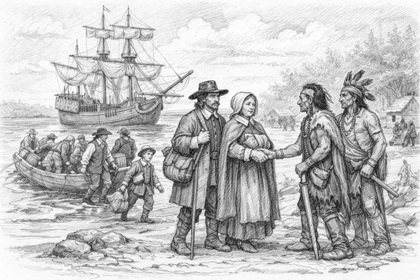
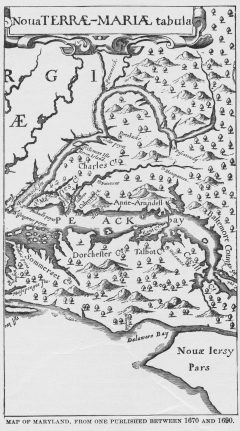
In March 1634, two ships—the Ark and the Dove—arrived in the Chesapeake carrying around 140 settlers, both Catholic and Protestant. They established the first permanent settlement at St. Mary’s City, on land purchased from the Yaocomico people.
The early years were marked by cautious cooperation. Maryland’s leadership understood that Catholic settlers were a minority, even in a colony founded partly for their protection. As a result, early governors, including Leonard Calvert, adopted a pragmatic approach, emphasizing civil order and economic survival over sectarian dominance.
Tobacco quickly emerged as the colony’s economic foundation. Like Virginia, Maryland’s soil and climate were well suited to the crop, and European demand was insatiable. Tobacco cultivation required large tracts of land and significant labor, setting patterns that would shape Maryland society for decades.
Yet stability was fragile. The colony existed in a volatile political environment, influenced by events in England and rival claims in North America. Religious tolerance, though encouraged, was far from secure.
The Act of Toleration and Religious Conflict
In 1649, the Maryland Assembly passed what became known as the Maryland Toleration Act, formally titled “An Act Concerning Religion.” It granted freedom of worship to all Christians who professed belief in the Trinity.
By seventeenth-century standards, this was a remarkable measure. It was not modern religious freedom—non-Christians and anti-Trinitarians were excluded—but it represented a deliberate attempt to manage religious diversity through law rather than repression.
The Act, however, did not eliminate conflict. Puritan settlers, many of whom had migrated from Virginia, viewed the Calvert proprietorship with suspicion and resented the presence of Catholics in positions of authority. During the English Civil War, these tensions exploded.
In the 1650s, Puritan forces seized control of the colony, repealed the Act of Toleration, and briefly outlawed Catholicism. The proprietary government was eventually restored, and religious toleration reinstated, but the episode revealed how dependent Maryland’s experiment was on political stability in England.
Proprietary Power and Popular Resistance
Throughout the late seventeenth century, Maryland oscillated between proprietary authority and popular resistance. Governors appointed by the Calverts sought to enforce quitrents, regulate trade, and maintain order, while colonists—especially Protestant planters—pushed back against what they perceived as arbitrary rule.
In 1689, news of the Glorious Revolution in England reached the Chesapeake. Protestant colonists in Maryland rebelled against the Catholic proprietary government, leading to the overthrow of Lord Baltimore’s authority. For more than two decades, Maryland became a royal colony, administered directly by the Crown.
During this period, the Church of England was established as the official church, and Catholics were effectively excluded from political life. Although the Calverts eventually regained control in 1715, the colony that emerged was far less tolerant than the one originally envisioned.
Society and Economy in the Eighteenth Century
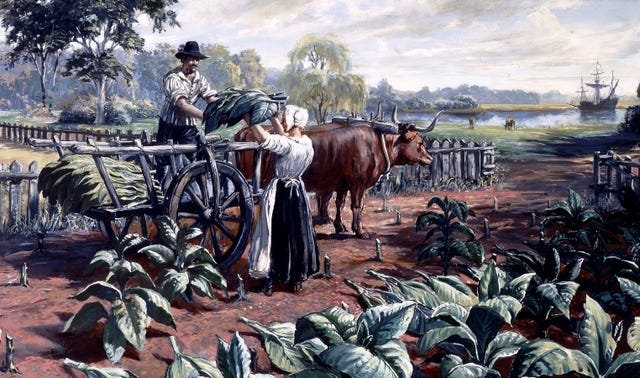
By the early eighteenth century, Maryland had entered a phase of relative stability and growth. Tobacco remained the economic backbone of the colony, but its cultivation had reshaped society in profound ways.
Large plantations dominated the landscape, particularly in the Tidewater region. Wealth and power concentrated in the hands of a planter elite who controlled vast acreage and hundreds of laborers. Initially, much of this labor came from indentured servants, but over time enslaved Africans became the dominant workforce.
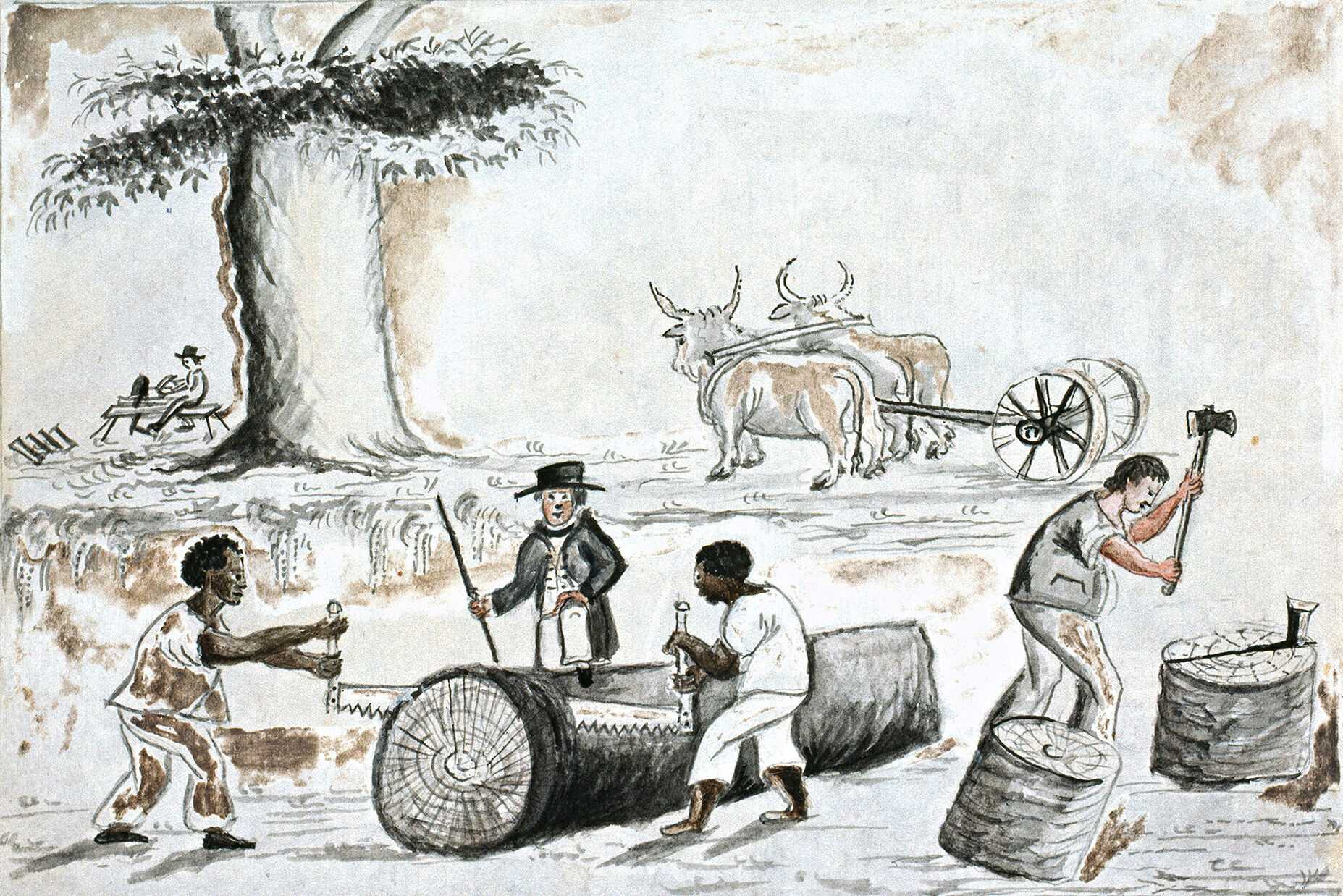
Slavery in Maryland differed somewhat from that of the Deep South. The colony’s proximity to Pennsylvania and its more diversified economy created a somewhat fluid society, but bondage was nonetheless brutal and enduring. By the mid-eighteenth century, enslaved Africans and African Americans made up a significant portion of the population.
Urban centers also emerged. Annapolis, which replaced St. Mary’s City as the capital in 1694, became a hub of political, social, and cultural life. Its elegant buildings, printing presses, and lively port symbolized Maryland’s integration into the Atlantic economy.
Political Institutions and Colonial Governance
Maryland’s political system combined proprietary authority with representative institutions. The colonial assembly, composed of an upper house appointed by the proprietor and a lower house elected by freeholders, played a central role in governance.
Over time, the lower house asserted increasing influence, particularly over taxation and local affairs. This mirrored broader trends across British North America, where colonial legislatures gradually carved out spheres of autonomy.
The tension between local self-government and imperial oversight became more pronounced after 1700. British officials sought to standardize administration, enforce trade regulations, and assert parliamentary authority, while colonists defended what they viewed as their traditional rights.
Maryland in the British Atlantic World
Maryland was never an isolated colony. Its economy, culture, and politics were deeply connected to Britain, the Caribbean, and Europe. Tobacco exports tied planters to London merchants, while imported goods—from fine cloth to household wares—shaped colonial tastes and aspirations.
Education and intellectual life also reflected transatlantic ties. Wealthy Marylanders sent their sons to England for schooling, and Anglican clergy maintained close connections with the Church of England.
Yet these connections came at a cost. Trade regulations such as the Navigation Acts restricted colonial commerce, and economic downturns in Britain reverberated across the Chesapeake. By the mid-eighteenth century, many Marylanders felt that the imperial relationship benefited Britain more than the colonies.
The Road to Revolution (1763–1775)
The end of the French and Indian War in 1763 marked a turning point. Britain’s victory over France removed a major external threat but left the empire deeply in debt. Parliament responded by imposing new taxes and regulations on the colonies.
Marylanders, like other colonists, objected to measures such as the Stamp Act and the Townshend Duties. Protests erupted in Annapolis and other towns, and colonial leaders articulated arguments against taxation without representation.
Maryland’s gentry played a prominent role in the emerging resistance movement. Figures such as Charles Carroll of Carrollton articulated a vision of colonial rights grounded in English constitutional tradition.
By 1774, Maryland had joined other colonies in forming committees of correspondence and sending delegates to the Continental Congress. Although many colonists initially sought reconciliation rather than independence, events moved quickly.
When fighting broke out in 1775, Maryland stood at a crossroads. Its long history of negotiation, compromise, and resistance had prepared it for the revolutionary moment.
Conclusion: Maryland’s Colonial Legacy
From its founding in 1634 to the brink of revolution in 1775, Maryland underwent a remarkable transformation. What began as a proprietary experiment in religious coexistence became a stratified plantation society and, ultimately, a participant in a continental rebellion against imperial authority.
Maryland’s colonial experience was shaped by paradoxes: tolerance and exclusion, autonomy and dependence, prosperity and exploitation. These contradictions left an enduring imprint on the state’s identity.
As the Revolution approached, Marylanders drew upon a century of political practice and economic integration to imagine a new future. The colony’s past—its struggles over power, belief, and rights—helped define its path into the modern United States.


You May Also Like
The History of the Virginia Colony, 1607–1775
The Colonial History of Massachusetts, 1620–1775