Understanding Hegel’s Dialectic
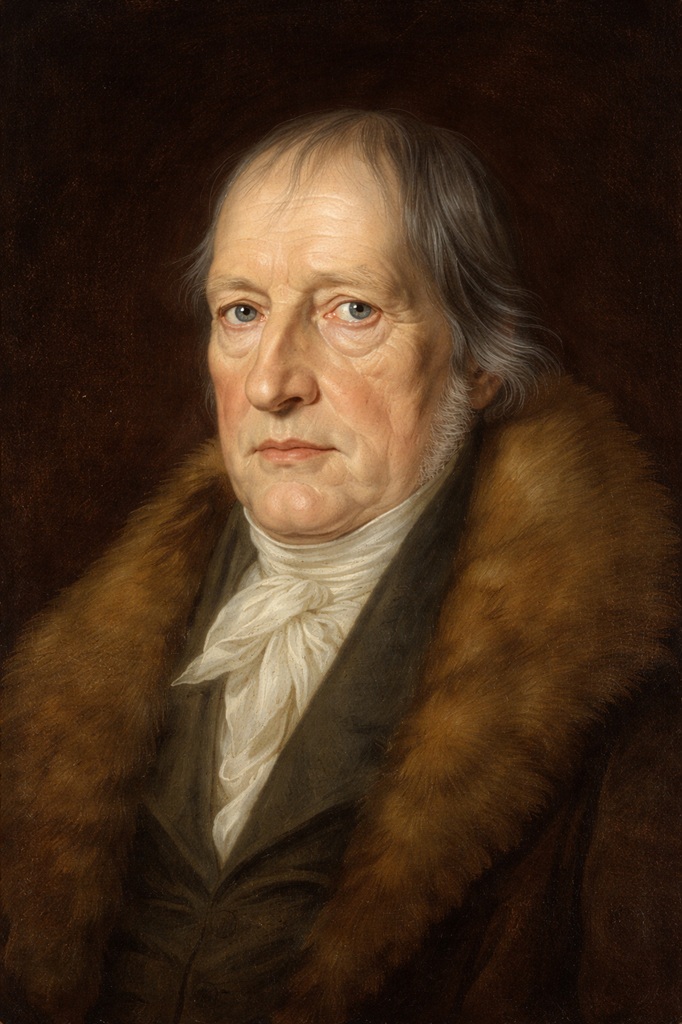
Few ideas in the history of philosophy have been as influential—and as misunderstood—as the dialectic of Georg Wilhelm Friedrich Hegel. The word dialectic is often invoked casually, reduced to a simple formula of “thesis, antithesis, synthesis,” or treated as an abstract puzzle best left to specialists. Yet for Hegel, dialectic was neither a slogan nor a rigid method. It was a way of understanding how reality itself develops—how ideas, institutions, cultures, and even freedom unfold over time through tension, contradiction, and resolution.
To understand Hegel’s dialectic is to gain insight into modern philosophy, political theory, history, and even contemporary debates about progress and conflict. This essay aims to clarify what Hegel meant by dialectic, how it works, why it matters, and why it remains so challenging—and rewarding—to grasp.
The Problem Hegel Was Trying to Solve
Hegel did not invent the idea of dialectic from nothing. The term comes from ancient Greek philosophy, particularly from Plato, where dialectic referred to a method of inquiry through dialogue—testing ideas by exposing contradictions and refining concepts. But Hegel faced a very modern problem.
By the late eighteenth and early nineteenth centuries, European thought was fragmented. Enlightenment rationalism emphasized universal reason and scientific clarity, while Romanticism stressed individuality, emotion, and historical uniqueness. Political life was similarly divided between traditional authority and revolutionary demands for freedom, especially in the aftermath of the French Revolution. Philosophy itself seemed split between rigid systems and skeptical doubt.
Hegel sought a way to understand how these oppositions were not merely conflicts to be eliminated, but engines of development. Rather than choosing one side, he asked: What if contradiction is not a failure of reason, but its driving force?
The dialectic was his answer.
Dialectic Is Not a Mechanical Formula
One of the most persistent misconceptions about Hegel is that his dialectic follows a neat three-step formula: thesis, antithesis, synthesis. Ironically, Hegel himself never systematically presented his dialectic in these terms. The formula was popularized later as a teaching shortcut—and, unfortunately, it often obscures more than it reveals.
For Hegel, dialectic is not a method imposed from the outside. It is not a recipe one applies to any topic. Instead, it is the inner movement of concepts themselves. When we think carefully about something—freedom, being, law, selfhood—we discover that each concept contains tensions or contradictions. These contradictions are not accidental; they arise from the concept’s own logic.
Dialectic, then, is the process by which a concept reveals its limitations, transforms itself, and becomes something richer and more adequate.
Contradiction as the Engine of Thought
At the heart of Hegel’s dialectic is a radical claim: contradiction is not irrational. In everyday thinking, contradiction is something to be avoided. If a statement contradicts itself, we assume it must be false or confused.
Hegel turns this assumption on its head. He argues that contradiction is essential to understanding change. If something were completely fixed and self-identical, it could never develop. Movement, growth, and transformation require tension.
Consider a simple example: the idea of freedom. At first, freedom might be understood as doing whatever one wants, unconstrained by rules or obligations. But this notion quickly collapses. If everyone acts purely on impulse, freedom becomes chaos, and the freedom of one undermines the freedom of others. The original idea of freedom contradicts itself.
This contradiction forces a transformation: freedom must be rethought not as the absence of limits, but as participation in rational laws or ethical institutions. The concept evolves by confronting its own inadequacy.
This pattern—concept, contradiction, transformation—is the living core of dialectic.
The Famous Beginning: Being, Nothing, and Becoming
Hegel opens his monumental Science of Logic with what seems like an almost absurd starting point: pure being. Being, taken in its most abstract sense, has no specific qualities. It is simply being.
But when we try to think pure being, we find that it is indistinguishable from nothing. A completely indeterminate being has no content, no features, no distinctions. It dissolves into emptiness.
Rather than treating this as a failure, Hegel treats it as a discovery. Being and nothing are not opposites in this abstract sense; they pass into one another. Their unity gives rise to a new concept: becoming. Becoming captures the dynamic transition between being and nothing—coming-to-be and ceasing-to-be.
This opening move illustrates the dialectical process in its purest form. A concept, when thought rigorously, undermines itself and gives rise to a more concrete concept that preserves what was true while overcoming what was inadequate.
Aufhebung: The Key Term of the Dialectic
No discussion of Hegel’s dialectic is complete without the German word Aufhebung. This term is notoriously difficult to translate because it carries multiple meanings at once: to cancel, to preserve, and to lift up.
In dialectical development, a concept is negated—its limitations are exposed—but it is not simply discarded. Instead, it is preserved within a higher, more comprehensive concept. The earlier stage is both overcome and retained.
This is why dialectic is not simple destruction. Each stage is necessary. Without the earlier concept, the later one could not emerge. History, for Hegel, does not erase the past; it incorporates it.
Understanding Aufhebung helps explain why Hegel saw progress as complex and non-linear. Development involves loss and gain, negation and preservation, conflict and reconciliation.
Dialectic and Self-Consciousness
One of the most famous—and dramatic—applications of Hegel’s dialectic appears in his account of self-consciousness, particularly in the so-called master–slave (or lord–bondsman) dialectic in the Phenomenology of Spirit.
Hegel argues that self-consciousness is not something we possess in isolation. To be self-conscious is to be recognized by another self-conscious being. Recognition is essential to identity.
In the struggle for recognition, two individuals confront each other. Each wants to be acknowledged as independent and autonomous. This confrontation leads to a relation of domination: one becomes the master, the other the slave.
At first glance, the master seems victorious. But dialectically, the situation reverses. The master depends on the slave’s labor and recognition, while the slave, through work and engagement with the material world, develops discipline, self-awareness, and a deeper sense of agency.
The contradiction within domination drives the development toward a more reciprocal form of recognition. This analysis has had enormous influence on later thinkers concerned with power, labor, and social identity.
History as a Dialectical Process
For Hegel, dialectic does not operate only in abstract logic or individual consciousness. It governs history itself. History, he famously claimed, is the progress of the consciousness of freedom.
Different historical eras embody different understandings of freedom. In some societies, only one person is free; in others, some are free; in modern societies, freedom is recognized in principle as universal. Each stage contains contradictions that eventually lead to its transformation.
Crucially, Hegel did not see history as random or cyclical. Nor did he think it followed a simple, straight line. History advances through conflict—between ideas, institutions, and social forces—until a new form emerges that resolves earlier tensions, at least temporarily.
This vision profoundly shaped modern historical thinking, influencing political theory, sociology, and philosophy of history well beyond Hegel’s own system.
Dialectic and the Modern State
Hegel’s dialectic also underlies his controversial views on the modern state. He rejected both extreme individualism and authoritarian collectivism. Instead, he argued that true freedom is realized through participation in rational social institutions—family, civil society, and the state.
Here again, dialectic is at work. Pure individual freedom collapses into fragmentation, while pure collective authority suppresses individuality. The modern constitutional state, at least in theory, reconciles these opposites by embedding individual rights within a shared ethical life.
Whether one agrees with Hegel’s conclusions or not, his dialectical approach forces us to think beyond simplistic binaries. Political life, like thought itself, develops through tensions that cannot be resolved by choosing only one side.
Why Hegel Is So Difficult
Hegel’s reputation for obscurity is not entirely undeserved. His writing is dense, technical, and often abstract. But the difficulty is not merely stylistic. Hegel is difficult because he asks readers to think differently.
He resists static definitions. Concepts are not fixed containers but evolving processes. Reading Hegel requires patience and a willingness to let ideas unfold gradually, sometimes contradicting earlier claims.
Moreover, Hegel assumes that philosophy must reflect the movement of reality itself. His sentences often mirror the dialectical motion he describes, looping back, qualifying themselves, and advancing through tension. This can be frustrating—but it is also part of the lesson.
Misuses and Simplifications of the Dialectic
In popular discourse, dialectic is often flattened into a simplistic formula: problem, opposition, solution. This version strips dialectic of its depth and turns it into a managerial tool or debating trick.
Hegel’s dialectic is not about forcing compromise or blending opposing views into a middle ground. True dialectical resolution often produces something qualitatively new—not a half-measure, but a transformed understanding that redefines the terms of the conflict.
Reducing dialectic to a slogan misses its most radical insight: that contradiction is not an error to eliminate, but a truth to understand.
The Legacy of Hegel’s Dialectic
Hegel’s dialectic has left a vast intellectual legacy. It shaped later German philosophy, influenced Marx’s analysis of capitalism (even where Marx rejected Hegel’s idealism), and informed existentialist, phenomenological, and critical traditions.
Even thinkers who strongly opposed Hegel often did so on dialectical terms—defining their ideas in relation to his. The very structure of modern philosophical debate bears his imprint.
Beyond philosophy, dialectical thinking continues to inform how we approach social change, cultural conflict, and historical interpretation. Whenever we ask how opposing forces generate new realities, we are thinking dialectically, whether we realize it or not.
Why Dialectic Still Matters Today
In a world increasingly polarized by rigid positions, Hegel’s dialectic offers a challenging alternative. It does not ask us to deny conflict or pretend contradictions do not exist. Instead, it asks us to understand them deeply.
Dialectical thinking encourages patience with complexity. It resists the temptation of simple answers and invites us to see tension as productive rather than destructive. Progress, in this view, is not the elimination of disagreement, but its transformation.
Understanding Hegel’s dialectic does not require accepting every aspect of his philosophy. But it does require taking seriously his central insight: that thought, history, and freedom are living processes shaped by contradiction and development.
Conclusion: Learning to Think in Motion
To understand Hegel’s dialectic is to learn how to think in motion. Concepts are not static. They evolve. They fail, contradict themselves, and are reborn in more adequate forms.
Hegel challenges us to abandon the comfort of fixed categories and to embrace the unsettling idea that truth unfolds over time. In doing so, he offers not just a philosophical system, but a disciplined way of confronting complexity—one that remains as relevant today as it was in his own turbulent age.
Dialectic, in the end, is not merely about ideas. It is about learning how to live thoughtfully in a world that is always becoming.

You May Also Like